I finished most of the benchwork on the one side of the peninsula with only the rim joist left to install. The big hole in the third picture is where the helix benchwork is to go. Probably my next project. As I had mentioned before I will have to “daylight” part of the wall for the utility room and I’m not really looking forward to that. Not that is tough, just that it’s going to be messy.
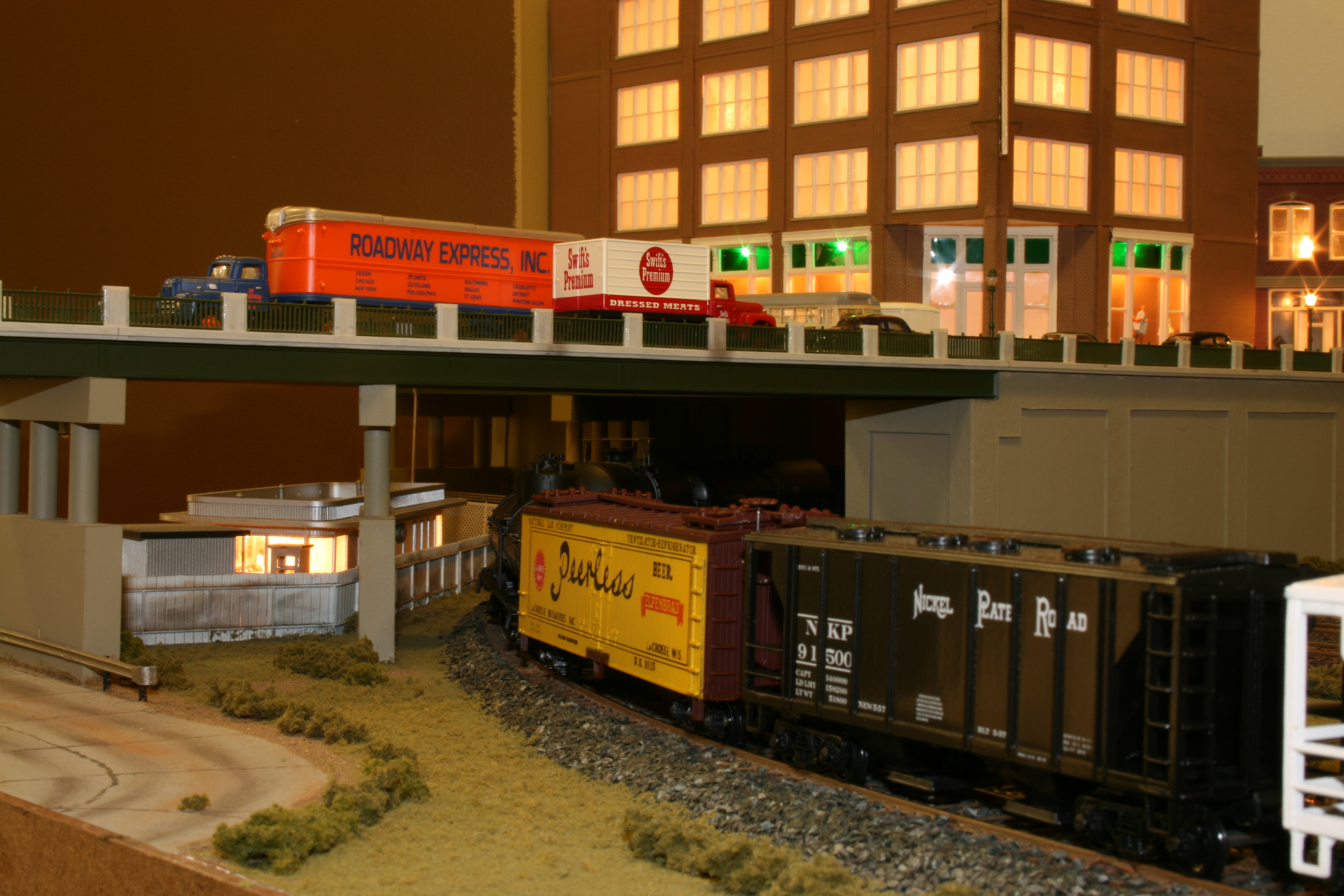
The lowered portion of the of the benchwork along the short leg of the peninsula is for a “signature” scene. The Twin Cities isn’t by any means flat. The rail lines through the cities travel through a variety of terrains, there are flat open areas, long cuts and areas that the railbeds were laid on long berms. When I first saw Walther’s art deco bridge I wanted to recreate one of the berm scenes with the tracks running along and above a neighborhood. This area seemed perfect as I hadn’t planned on anything happening on this stretch as it is across from the New Brighton rail yard and didn’t want to have people bumping into each other because of the narrower aisle width here.
View down the long leg of the peninsula.Down the short leg of the peninsula.View of where the helix benchwork is to go.Overview of the newest benchwork.
This will be quick. I finally finished the “electronics” cabinets, the ones that will house the DCC, switch controllers, block detectors, signal controllers, power supplies, etc. What should have been a simple weekend project ended up taking me over a week to finish, install and paint. But it’s done and most of the wood for the benchwork above is ready to put in. Once the benchwork is installed I will be able to start running the bus wiring to those sections that are finished.
New DCC and electronics cabinet.Alternate view of cabinet.
This week I am trying something a little different, mainly because I’m running out of decent pictures of the old layout. More of a history thing or of little treasures found.
Since my father passed away about 14 years ago my mother has been slowly going through the boxes of stuff that my father had collected. He was the ultimate pack rat. Anything she finds that even remotely has anything to do with railroads, she sets aside for me. I usually bring it home, look at it and decide whether to keep it or toss it. But sometimes I’ll set it aside to look at later and it ends up tucked away somewhere until I come across it again. Such is the case with the following.
While planning the railroad, I knew that I would have a staging yard for the “rest of the world” where trains or freight cars would come from somewhere else to the main yard in New Brighton. For freight this would be best handled by the Minnesota Transfer Railroad, a line set up by the 9 major railroads serving the Twin Cities. It would move cars between the major rail yards, while also serving local industries. In New Brighton that would have been the Twin Cities Arsenal, the New Brighton stockyards, a pole and tie yard and several lesser industries.
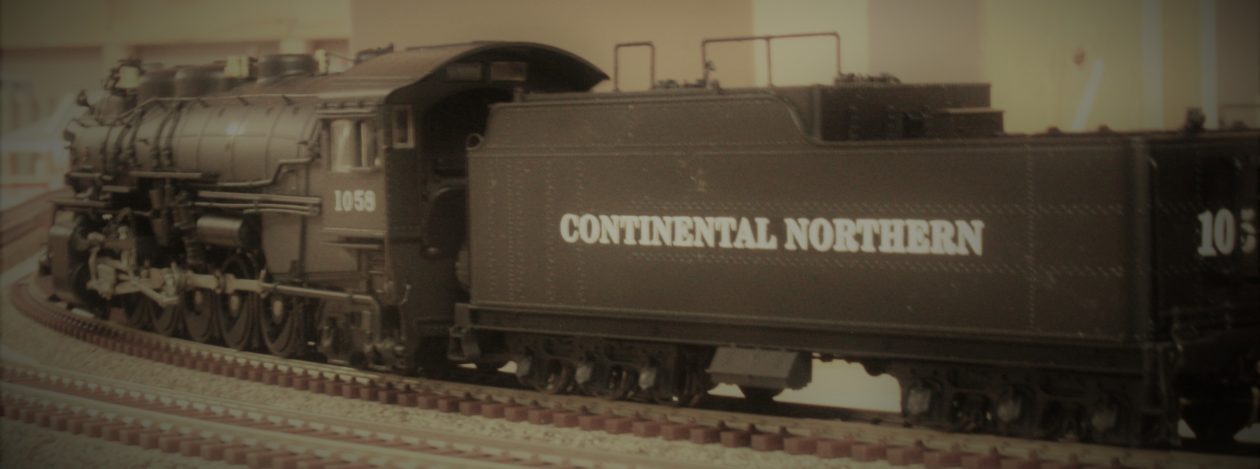
While researching the MTR online I found a group of photos showing the line in action, almost exclusively with steam power. I came across a Proto 2000 0-8-0 at a great price and figured I would reletter it for the MTR and my motive power for the transfer railroad would be handled.
The other thing a found while researching was the constant reference to a book – Gateway To The Northwest, The Story of The Minnesota Transfer Railway. I decided I had to have this book, only it was self published by the author in 1954.
So for about the last two years I have been regularly checking the internet for copies, as well as auction sites and every second hand bookstore I could find. While going through boxes of the stuff I had set aside until later and putting what was “keepers” in the new cabinets, I almost fell over when I came across some photocopies. My father had photocopied the entire book I had been searching for.
Moments later I came across not 1, but 3 copies of the book itself. I should explain that the book is soft covered and only 32 pages long. It mentioned that the “Transfer” with the power and financial backing of 9 major roads dieselized in about 2 years and by 1954 ( the year I’m modeling ) only had two 0-6-0’s on hand. 1 for backup and the other with a flanger. So now I’m looking for a 1000hp Alco to handle the transfers.
The Book.
Next up is copy of ” The Railroad Telegrapher “. It’s dated September 1913. Something my grandfather had saved and my father ended up with. It contains a wide variety of opinion pages, stories, updates on telegraph operators for all roads by divisions ( weddings, deaths, births of children, promotions, transfers, etc. ) , track updates for all roads by division ( tracks taken out of or returned to service ), as well as poetry, updates on the Women’s Auxiliary, jokes and of course plenty of ads aimed at railroad workers in general, telegraph operators specifically. Kind of a Readers Digest for the railroad world.
Saved by grandfather and passed along by my father to me.
Last up is a train order sheet that was tucked into the book. I’m sorry that I didn’t pay attention to where it was in the book as it may have marked a page that referenced my grandfather. I also apologize for it being in two parts as it was to big for my scanner.
Train sheet from the C,St.P,M&O, first half.And the second half.
I finally worked out the logistics of the semi-permanent section of the benchwork over the window. I cut the wall sections and added in blocks that can be unscrewed to make a 4 foot section removable should I need to access the window should it need maintenance of some sort. Only the upper deck would come out as the lower deck is at a height that is lower than the window. As I mentioned because of this I had to move the bridge scene farther into what was the Duluth yard than I wanted it.
The back corner benchwork finished.The window area with the removable section in view.
As far as wiring goes I added in plugs to the lighting string, which because it’s nothing more than a extension cord with lights wired into it would seem pretty basic, it took awhile for me to figure it out and wrap my head around it. When I did it was a “aha” moment as well as a “duh” moment. As far as the rest of the wiring goes I will have to add in terminal blocks for the DCC buss, switch wiring and lights. I prefer to keep connections to a minimum in wiring, but unfortunately this is unavoidable.
Plugs to disconnect the light string.
And last, but not least, is a closer view of the bridge scene. Why is it a big deal? Because at this point it helps to have things that shows you where you’re headed as you push ahead with the benchwork.
It’s surprising what little most of us know about our own family histories. Yes, we know about our immediate families from the time we are aware enough to remember. But what about before that? I know that my father grew up in northern Minnesota on a farm ( hated it ), Joined the Army Air Corp in WWII, became a Lieutenant and commanded his own B-17 for thirty missions. After his thirtieth, he flew cargo planes until rotated back stateside where he became an instructor. Other than that he talked little about the war. He went to college and got his degree in Electrical Engineering and went to work for Honeywell Aerospace designing guidance systems for rockets. Yes , he was a rocket scientist. (Absolutely loved it)
But go back another generation and it gets tougher. Which brings me to the reason for this post. My grandfather was a farmer, obviously since my dad grew up on the farm. But that was his second career. Once my dad realized that model railroading was more then a passing fad with me ( as it had been for my brothers ), he told me that my grandfather had worked for the railroad before he bought his farm. There were other little details about it that he passed along, but no one seemed to know a lot about what he did or even which railroad he worked for.
My mother gave me a couple of pictures of my grandfather, with those and some digging I am able to put together the following history of my family’s railroad history.
When my grandfather came over from Sweden there is little known about what he initially did. He ended up in southeastern South Dakota where he became a telegraph operator for the Chicago, St. Paul, Minneapolis and Omaha Railroad.
My grandfather outside the depot in Montrose, SD. Undated photograph.
The first known station that he worked out of was in Montrose, SD. just northwest of Sioux Falls, SD. As you can see in the photo he is standing in front of the depot in Montrose, if you look to the left in the photo you can see the C,St.P,M & O boxcar spotted behind the station. Of importance to the family is that it was in South Dakota that he met and married my grandmother.
My grandfather in the depot at Madelia, Mn. in 1909
The next photo shows my grandfather in the depot in Madelia, MN in 1909. My father told me that as you gained experience and seniority you moved stations. Moving from the smaller towns up the line towards a major city. In this case he was working his way up the line towards Minneapolis/St. Paul. Montrose was 259 miles from MSP. Madelia was 105 miles from the cities. Side note, at the time of the Madelia photo my grandfather was 22 years old. The last reference of my grandfather that I could find was a mention in a company newsletter from 1920 where it mentions that he was taking a fishing trip to central Wisconsin and everyone was looking forward to the fish fry when he got back. At this point he was working out of the station in Savage, MN. Savage, MN. is just 20 miles from Minneapolis. My father was born in Savage in 1918. At some point while working out of Savage my grandfather decided he had enough money, quit the railroad and moved to northern Minnesota and bought his farm.
Interestingly enough, my wife’s grandfather ( also on her father’s side) worked for the Soo Line in central Wisconsin. One has to wonder, did they possibly meet when my grandfather was on his fishing trip?
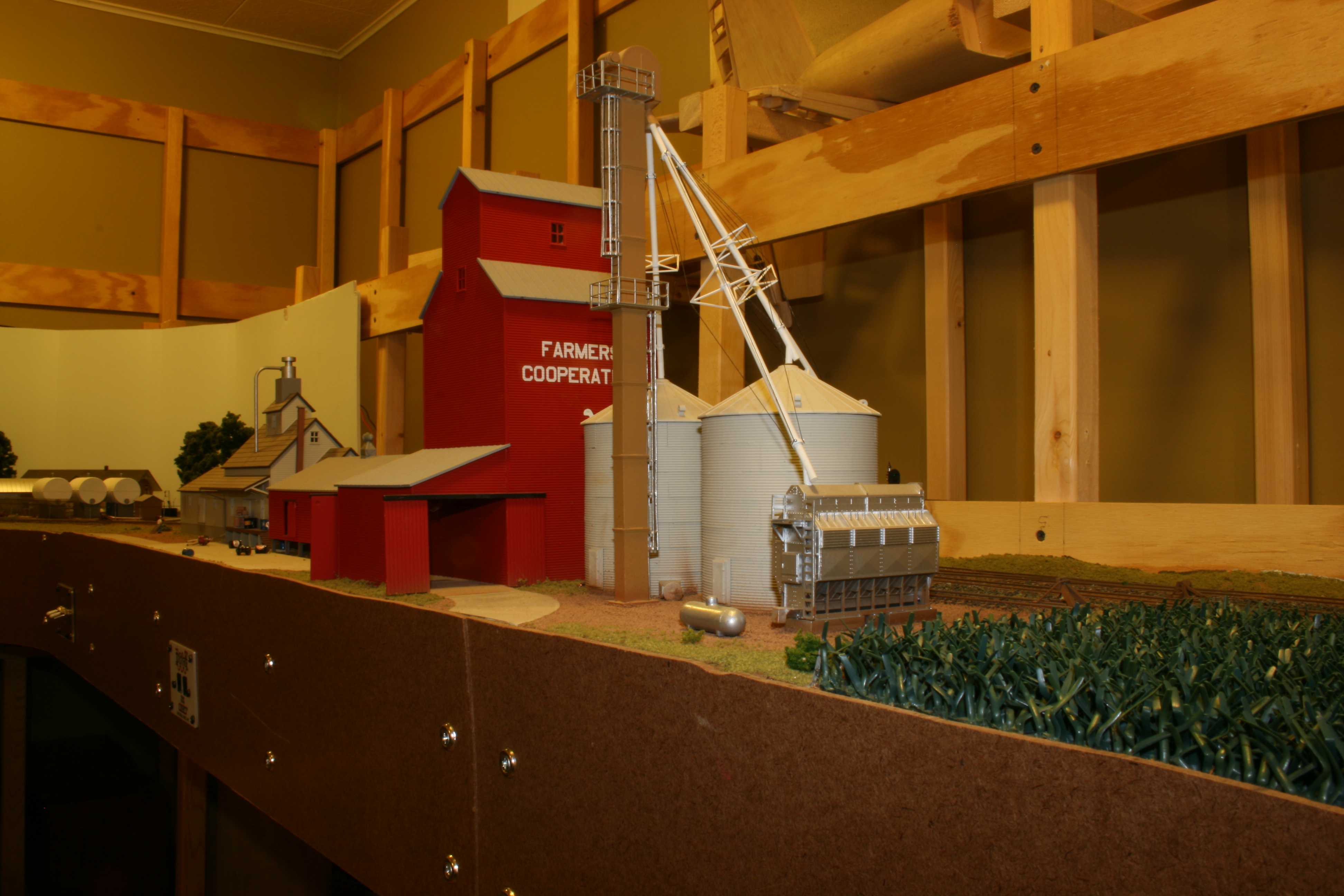
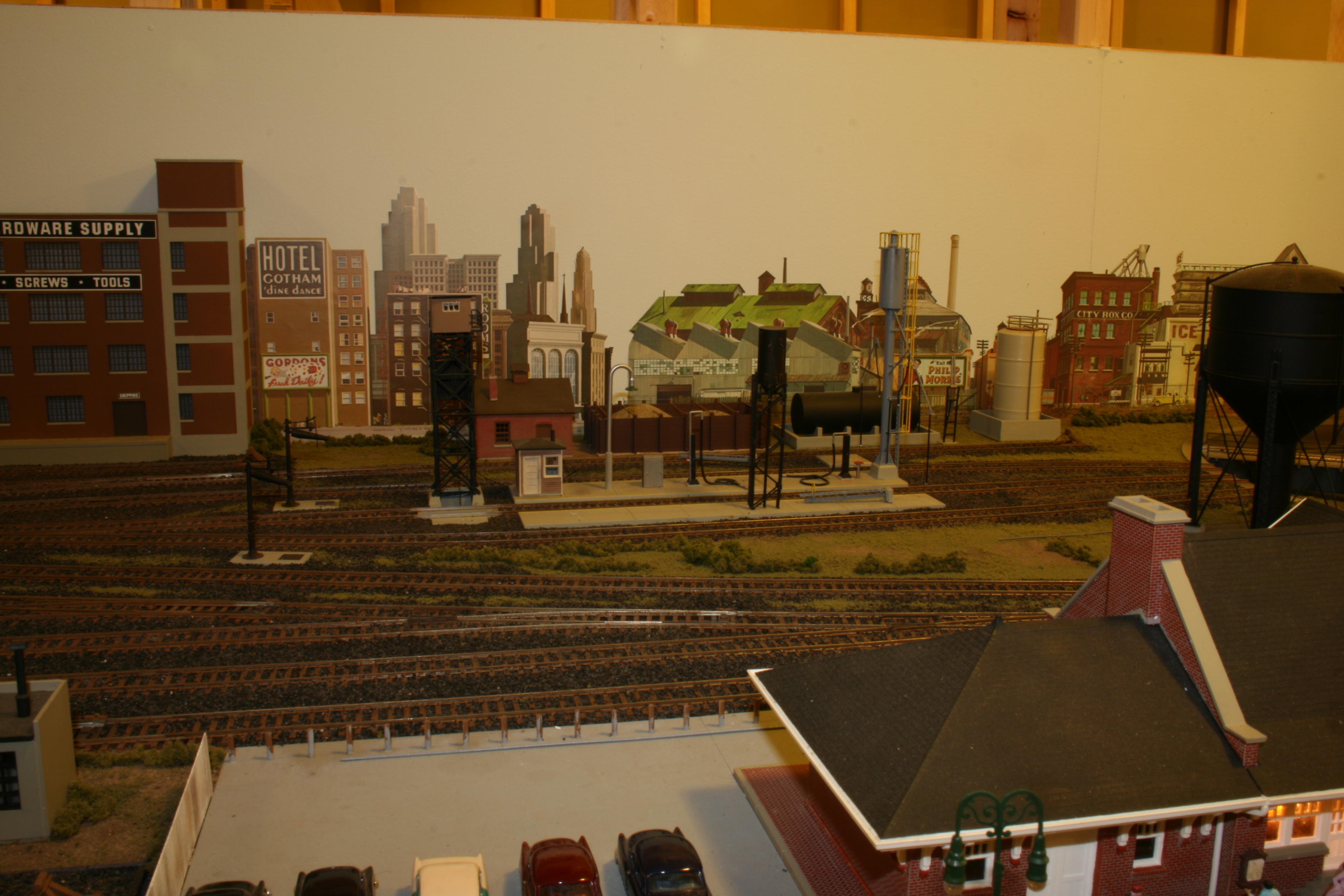
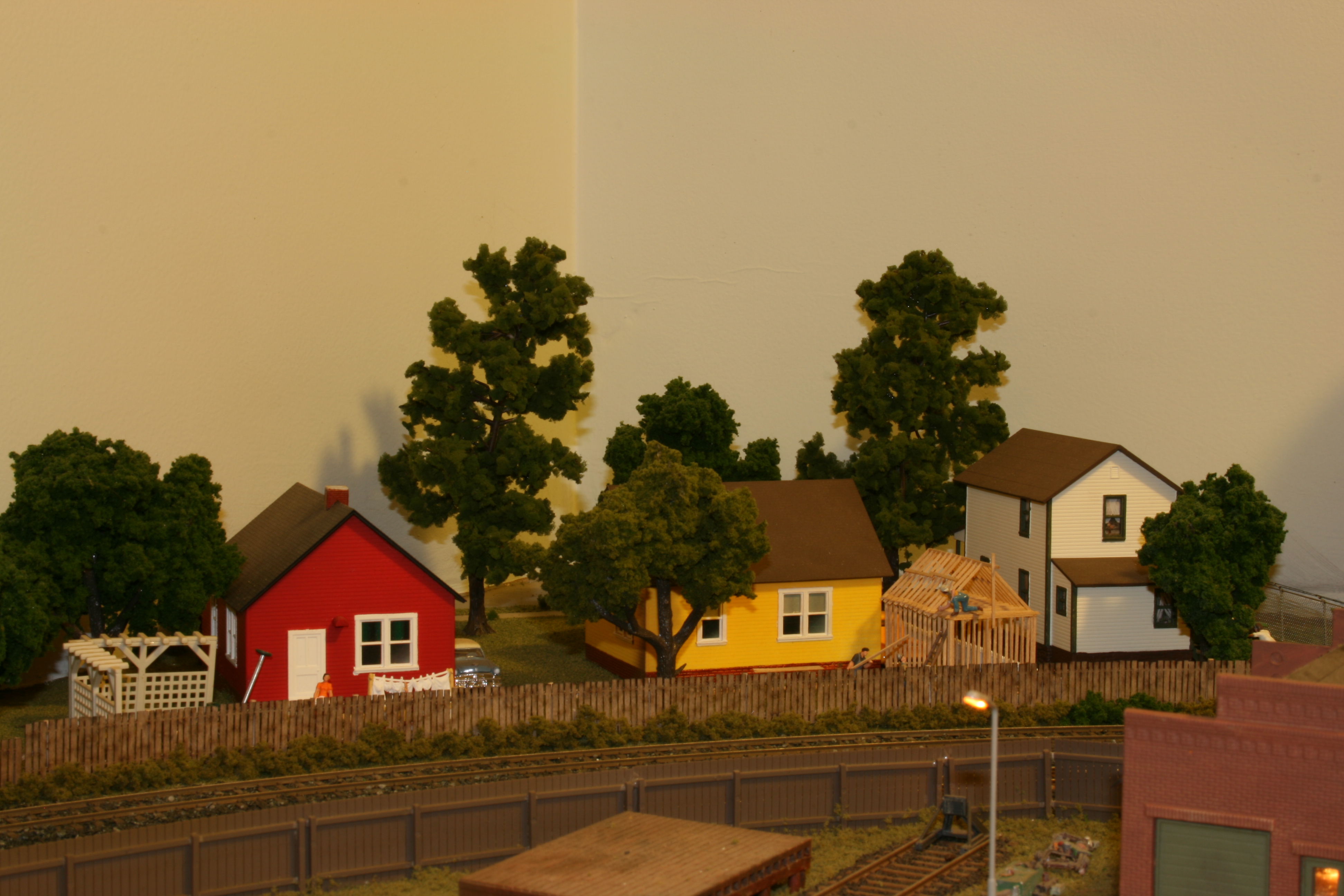
The yard throat and fueling facility with the depot in the foreground.Another shot of the neighborhood across the tracks.Opposite view of diner scene where the railroad turns into the backdrop.